

How Is Green Hydrogen Produced?
A hydrogen vehicle without nearby fuel is not a clean mobility solution. It is a stranded asset. That is why the question how is green hydrogen produced matters far beyond chemistry. It sits at the center of whether hydrogen transportation can scale, whether fleets can operate reliably, and whether early infrastructure investors are stepping into a real market or just a concept.
Green hydrogen is produced by splitting water into hydrogen and oxygen using electricity generated from renewable sources such as solar or wind. That is the simple version. The real answer is more commercial, and more interesting. The method of production determines cost, reliability, emissions profile, siting flexibility, and whether hydrogen can be made where it is actually needed.
How is green hydrogen produced in practice?
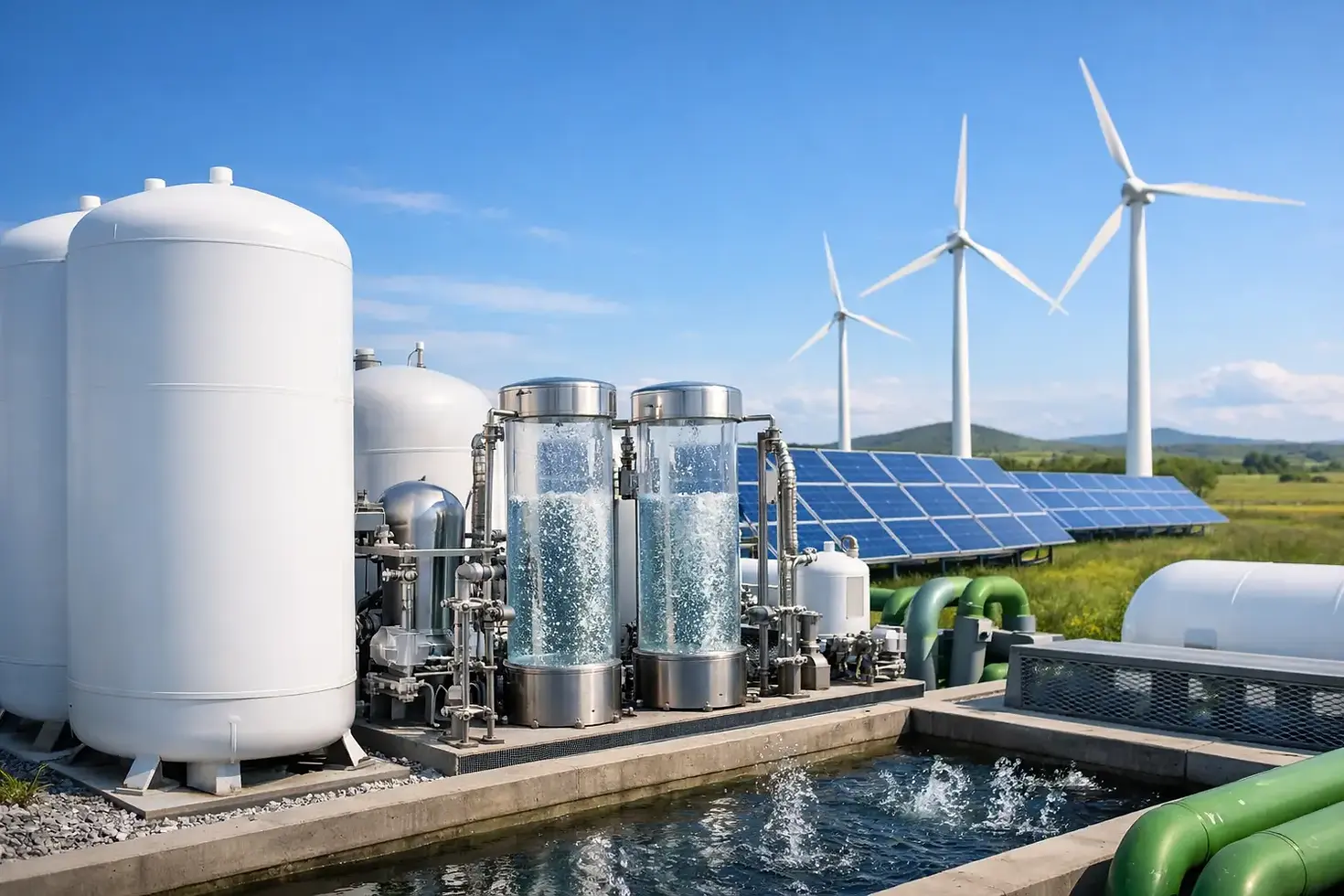
At a practical level, green hydrogen production starts with three inputs: water, renewable electricity, and an electrolyzer. The electrolyzer is the core system. It uses an electric current to separate H2O into hydrogen gas and oxygen.
If the electricity comes from fossil power, the hydrogen may still be low-emission in some cases, but it is not truly green. If the electricity comes from renewable generation, the process becomes green hydrogen production. That distinction matters because the market is moving away from hydrogen as a generic commodity and toward hydrogen with a documented emissions profile.
The production chain is straightforward on paper. Renewable power is generated, electricity is sent into the electrolyzer, purified water is fed into the system, hydrogen is produced, then compressed, stored, and dispensed or transported. What changes project economics is where those steps happen and how tightly they are integrated.
For mobility applications, local production has a major advantage. Producing hydrogen on-site removes the need to truck fuel from a distant plant, reduces supply chain friction, and gives station operators greater control over availability. No trucking. No delays. No middlemen. That is not just cleaner. It is better infrastructure.
The electrolysis process behind green hydrogen
Electrolysis is the defining technology behind green hydrogen. When electricity passes through water inside an electrolyzer, the water molecules split. Hydrogen forms at the cathode, oxygen forms at the anode, and the gases are separated for collection.
There are several electrolyzer types, but the two most discussed in commercial deployment are alkaline and PEM, or proton exchange membrane. Alkaline systems have been around longer and are often seen as proven and cost-effective. PEM systems are typically more responsive to fluctuating renewable power, which can make them attractive when paired with solar generation.
That responsiveness matters. Solar does not produce the same output every hour. If a project depends on renewable electricity, the hydrogen system either needs to handle variable generation or use battery storage to smooth supply. In many localized production models, battery integration helps stabilize operations, improve electrolyzer performance, and make fueling more dependable.
This is where green hydrogen shifts from science project to infrastructure asset. The winning systems are not just electrolyzers sitting next to solar panels. They are integrated platforms that manage power generation, energy storage, hydrogen production, compression, and dispensing as one coordinated operation.
Why renewable electricity is the key input
People often focus on water because hydrogen is made from water, but the harder input is clean electricity. The carbon profile of hydrogen is determined mainly by the electricity source.
That is why green hydrogen is different from gray hydrogen and blue hydrogen. Gray hydrogen is usually made from natural gas through steam methane reforming, which releases significant carbon emissions. Blue hydrogen uses a similar fossil-based process but adds carbon capture. Green hydrogen skips fossil feedstocks and instead relies on renewable power.
The upside is obvious: lower lifecycle emissions and a cleaner fuel pathway for transportation and industry. The trade-off is also real: renewable electricity can be intermittent, and project economics depend heavily on power cost, capacity factor, and system utilization.
That means there is no universal answer to the best way to produce green hydrogen. It depends on location, available solar or wind resources, power pricing, water access, equipment selection, and end use. A Gulf Coast industrial project will not look the same as an East Coast fueling node built to serve hydrogen vehicles in a region with limited existing infrastructure.
Water, compression, and storage are not side issues
When people ask how is green hydrogen produced, they often stop at electrolysis. That misses half the story. Producing hydrogen is only the beginning. To be useful as transportation fuel, hydrogen must be conditioned, stored, and delivered at the right pressure and purity.
Water quality matters because electrolyzers require purified water. The quantity is manageable, but treatment systems are essential. In most cases, water availability is not the biggest hurdle for localized stations, yet it still has to be planned correctly.
Compression is another major step. Hydrogen is a low-density gas, so it must usually be compressed for storage and vehicle fueling. That adds energy use, capital cost, and engineering complexity. Storage systems must also be designed for safety, operational continuity, and fueling demand patterns.
This is why integrated project design matters so much. A station that can make hydrogen but cannot store enough of it for peak fueling windows is not fully solving the customer problem. A site with production but weak compression capacity can create bottlenecks. In hydrogen, balance of plant is not a footnote. It is operational reality.
How is green hydrogen produced at a local fueling site?
At a local fueling site, the process is designed around immediacy. Renewable energy, often from on-site solar or dedicated clean power sourcing, feeds an electrolyzer. The electrolyzer produces hydrogen from purified water. The hydrogen is then compressed into storage tanks and dispensed directly into fuel cell vehicles.
That model changes the economics of supply. Instead of relying on a distant production facility, liquefaction or compression at another site, trucking logistics, and third-party fuel delivery, the station becomes its own source of fuel. That can improve resilience and reduce exposure to external disruptions.
It also changes market timing. Regions with hydrogen-capable vehicles but no practical refueling access do not need more theory. They need production where demand exists. Localized systems can fill that gap faster than waiting for a large centralized network to materialize.
For investors, this is where the infrastructure thesis becomes tangible. Green hydrogen is not just a molecule. It is a site-based business with equipment, throughput, utilization, and expansion potential. For fleet operators and mobility stakeholders, it is even simpler: if fuel is available where vehicles operate, adoption barriers start to fall.
The biggest challenges in green hydrogen production
Green hydrogen has momentum, but the path is not frictionless. Cost remains the main challenge. Electrolyzers, compression systems, storage, power integration, and fueling equipment all require upfront capital. Until equipment costs come down further and utilization rises, project economics must be designed carefully.
Electricity cost is another variable. Cheap renewable power can make green hydrogen much more competitive. Expensive power can break the model quickly. That is one reason co-locating production with generation or optimizing operations around battery storage can be so valuable.
Then there is the issue of demand timing. In early markets, fueling infrastructure often has to come before high vehicle volumes. That creates a familiar infrastructure problem: supply and demand must grow together. Someone has to build first.
Permitting, interconnection, and safety compliance also shape deployment timelines. Hydrogen is not unusual because it is impossible to manage safely. It is unusual because it requires serious engineering and disciplined execution. The companies that win in this market will be the ones that treat infrastructure like infrastructure, not like branding.
Why production method matters to market growth
If hydrogen is produced centrally and hauled long distances, the market inherits logistics cost and supply risk. If hydrogen is produced locally using renewable electricity, the market gets a cleaner and potentially more resilient foundation. That does not mean every project should be on-site. Some high-volume applications may favor centralized scale. But for emerging mobility corridors, local production can be the unlock point for adoption.
That is why this question is not academic. It determines whether hydrogen fueling is dependable, whether costs can improve over time, and whether regional corridors can be built station by station instead of waiting for a perfect national network.
Hexxco is built around that exact premise: produce hydrogen on-site, store it on-site, and fuel vehicles on-site. Build where the gap is real. Build early. Build infrastructure that creates the market instead of waiting for one to appear.
Green hydrogen production is ultimately simple in concept and demanding in execution. Water, renewable electricity, electrolysis, compression, storage, dispensing. Each step is proven. The opportunity comes from integrating them well, siting them intelligently, and deploying them where access is missing. The next phase of clean transportation will not be won by the best slogan. It will be won by the companies that put fuel on the ground where vehicles need it most.


Comments